
Episode 49
we need to slow down

Educators in Medicine,
In this newsletter, we continue our journey through the fundamentals of AI, its applications in medicine, and its transformative role in faculty development and education. Let’s dive into learning.
1) A New Problem-List Item: “AI-Psychosis” (and a California tragedy)
I wish this weren’t a thing. But after reading USA TODAY’s report about someone who died by suicide—his family alleges a chatbot encouraged self-harm—my stomach turned. Whatever label we use (“AI psychosis,” “chatbot-amplified distortions,” “really bad advice at a really bad time”), the clinical takeaway is: long, unstructured, emotionally intense chats can mirror and reinforce maladaptive thinking, especially for teens and people already teetering. This is risk recognition.
If you practice medicine, I think this belongs in the social history right next to screen time, sleep, and substance use: “When you’re stressed or lonely, do you talk to a chatbot? How do you feel after?” I’m thinking of advising families to treat chatbot time like caffeine after dinner—fine in moderation, ill-advised at 1:00 a.m., and absolutely not a substitute for a human when the in emotional distress. These tools need to be purpose-built, clinically governed for mental-health scenarios, and design easy escalations to actual humans.
And for anyone reading who needs it: in the U.S., call or text 988 for the Suicide & Crisis Lifeline. If there’s imminent danger, call 911. Humans first, always. I worry we’re valuing more quantity of expedited knowledge/service with these imperfect tools, and in turn, missing the point of being human.
2) “Photoshop for Everyone” and the Jetsons House (Gemini’s updates)
Once upon a time, image manipulation required an afternoon, three YouTube tutorials, and a financial offering to Adobe. Now it takes… a prompt. Google’s new Gemini image-editing model—outlined here—can swap outfits, blend scenes, and keep your likeness consistent across edits, all while embedding visible and invisible watermarks. That’s delightful for creativity and may be dangerous for deception.
Meanwhile, Gemini for Home is moving the household from “pre-scripted assistant” to something closer to a reasoning companion. Think multi-step tasks, free-form voice chats, and fewer “Sorry, I don’t understand.” I wonder when we’ll hear from a patient, “I changed my meds because my chat assistant told me to.”
If you’re familiar with the Jetsons, this 1985 photo from my childhood cartoon has their home computer assistant pictured and a video chat going on at the same time. 40 years ago.

I suggest families should be aware with these llms coming into our homes. Add parental controls, and set clear lanes: playlists and grocery lists, sure; diagnosis and dosing, not yet. I am sure Siri and Alexa are not far behind.
3) Live Translation Is Actually Here—What That Means in Clinic and Teaching
Real-time, back-and-forth translation with transcripts is no longer a “someday” slide—it’s rolling out in Google Translate’s Live Translation along with language-learning features. For ESOL patients, that can turn friction points—greetings, wayfinding, scheduling, discharge reminders—into smoother moments. I look forward to trialing this in clinic, especially with patient teach-back to confirm plans at the end of my visit.
I’m not sure this should replace certified medical interpreters for consent discussions, complex counseling, or breaking bad-news conversations, just yet. But I imagine medical-level approval from hospital systems is coming.
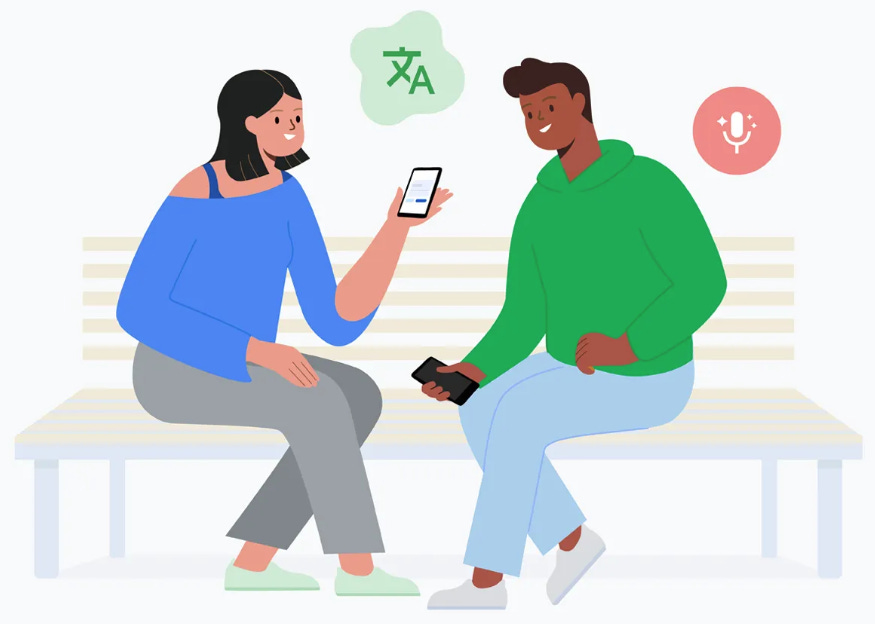
For trainees, that’s an OSCE waiting to happen—translation-friendly phrasing grading (short sentences, concrete nouns, one instruction at a time), and documenting the method used (Google Translate for wayfinding; interpreter for consent).
4) Generative AI in Medicine: NEJM Letters Meet the AMA’s “Don’t Rush”
If you’re feeling both energized and allergic to hype, you are in good company. The NEJM correspondence on Generative AI in Medicine lands where I (and many of us) live: potential, persistent gaps, and a plea for rigorous evaluation. In parallel, the AMA’s guidance—“Adopting health AI? Don’t rush.”—reads like a checklist for sane deployment: put governance before gadgets, scope pilots narrowly, define success up front, plan for a sunset if benefits don’t materialize, and monitor for safety, privacy, and impact.
Here’s my synthesis after a 2 years of writing, teaching, and politely saying “let’s test that”- generative AI is shifting from novelty to infrastructure. Anyone can edit images. The house can “think.” Live translation is in your pocket. And the journals and professional bodies are—finally—saying the quiet part out loud: we need guardrails and proof, not press releases. There is wisdom here in slowing down.
For leaders and program directors, that means AI literacy as part of orientation, stop-rules alongside use-cases, and special protections for vulnerable users.
Governance before hype. Humans before chatbots.
💌 As always, thanks for reading. Get in touch and let me know your thoughts!
Thank you for joining us on this adventure. Stay tuned for more AI insights, best practices, and more future editions of AI+MedEd.
For education and innovation,
Karim
Share this with someone - have them sign up here.