

Educators in Medicine,
In this newsletter, we continue our journey through the fundamentals of AI, its applications in medicine, and its transformative role in faculty development and education. Let’s dive into learning.
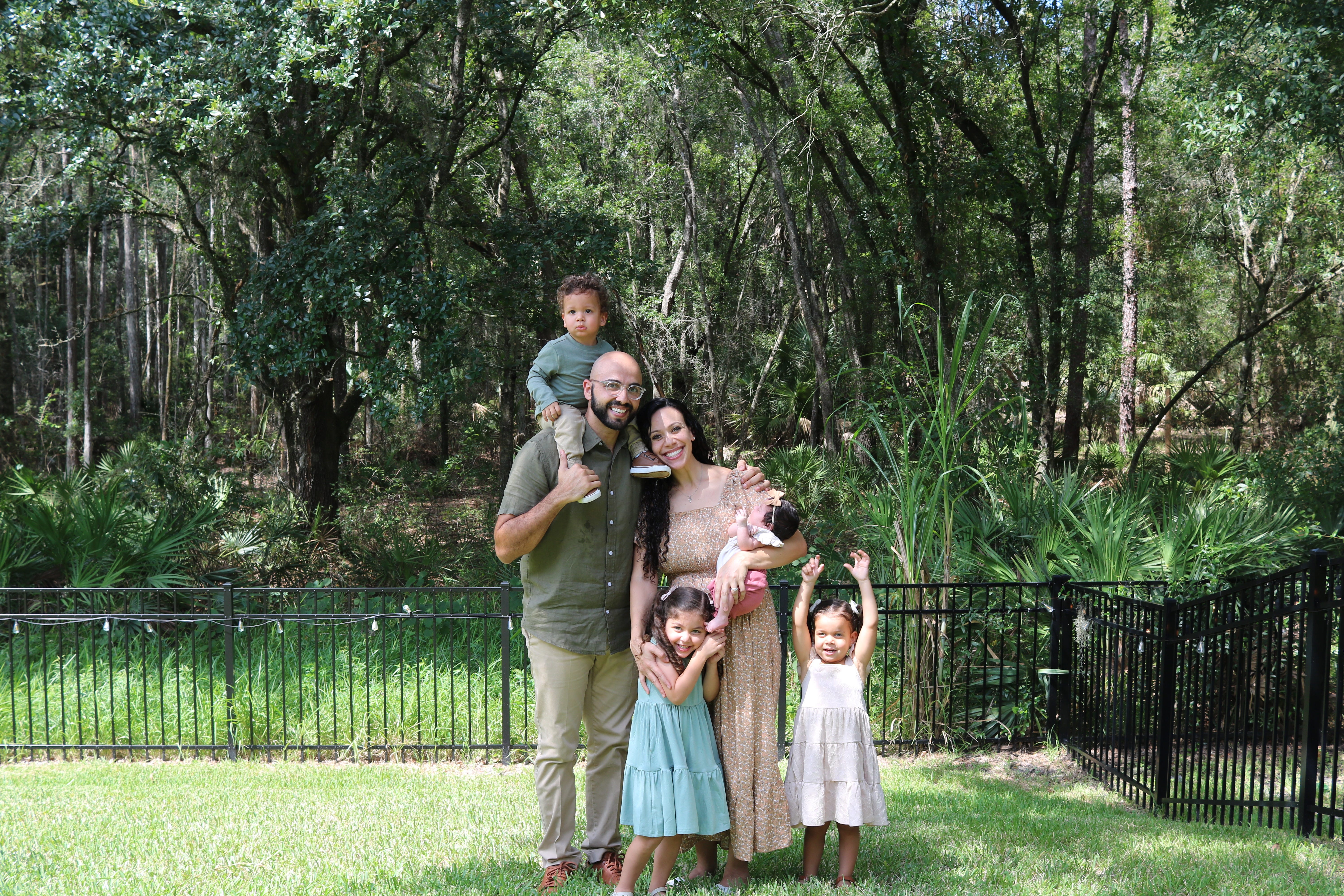
We’ve welcomed a new baby into the Hanna Family since I last wrote to you all. It is a miracle every time, and certainly gives you perspective like few things do.
A Quick Appetizer
Once again - Google Gemini is FREE for those with a .edu email address. I feel like this is my service to you all in exchange for reading. I will continue to tell you about free stuff when i find it. Enjoy!
🌌 1: When the Chart Talks to Millions of Other Charts
Back in 2022, Epic quietly announced that it was getting ready to pilot something called Best Care, built on Cosmos. The pitch, in the words of Johnston Thayer, RN, one of Epic’s clinical informaticists, was that the information would “initially be available within the Cosmos portal, but the goal is that the information will be directly embedded into the workflow.” The first use case was hypertension. The idea was simple and, if you have ever stared at a fourth antihypertensive choice, deeply appealing: show me how patients who look like this one actually responded to the treatments I am considering.
Fast forward to this summer. Per Fierce Healthcare’s coverage of Epic’s August announcements, Best Care Choices for My Patient is now live at nearly 60 organizations, and Cosmos sits on top of something like 310 to 320 million patients and north of 20 billion encounters, depending on which Epic page you read on which day. There is a Look-Alikes feature that has been used roughly 25,000 times in the past year to find colleagues who have treated a patient like yours. And Epic described a Cosmos-trained model (they call it Curiosity) meant to forecast things like readmission and stroke risk, with a target of EHR integration in early 2027.
Best Care is not a chatbot. It does not summarize your patient. It does not write a note. It answers the “What happened to everyone else like her?” Observational, de-identified, population-scale evidence, surfaced at the moment of decision. Live evidence with you seeing the forty-seven-year-old in room 3.
I think this is the promise of clinical informatics I have hoped up for. The collective experience of medicine, for a patient like mine.
💬 2: ChatGPT Health Meets Epic
OpenAI announced on September 1 that ChatGPT Health integrates with Epic, so that clinicians at organizations with a Business Associate Agreement can pull authorized patient information (notes, labs, meds, specialist documentation) into a conversation and ask things like “What has changed since this patient’s last visit?” or “Which recent lab results should I review?” Seven launch partners are named, including UCSF Health, Cedars-Sinai, Boston Children’s, HCA, AdventHealth, Baylor Scott & White, and Memorial Sloan Kettering. There is also a “Healthcare Public Data” plug-in that reaches into ClinicalTrials.gov, RxNorm, DailyMed, PubMed, and CMS coverage.
A few things worth noticing:
It is read-only. The AI does not write anything back to the chart. I kinda hope it stays that way for a good long while.
OpenAI reports that physicians across 60 countries reviewed over 700,000 model responses, and across 27 clinical use cases (pre-visit review, medication review, handoff summaries) about 4,300 ratings came back 99.1% “safe.” That is a marketing number and a real number at the same time. It is also a reminder that 0.9% of a lot is still a lot when the denominator is 300 million health questions a week.
TechCrunch, to their credit, put the lawsuits in the same article. A Florida pastor alleging a “near-fatal recommendation.” A family suing over dosage advice. These are consumer-side stories, not clinician-side, but they are the context in which this tool walks into the workroom.
I, for one, cant wait till this is mainstream. so much of my world is run by agents in Claude that I’d love to ask it about trends in my patient panel.
🔍 3: What Changes
If you have read this newsletter for a while, you know I keep coming back to the referee-in-the-ring example (Episode 67).
ChatGPT-in-Epic is closer to a summarizer standing between you and the chart. That is not always bad, but not necessarily good. Pre-visit review is real work, and this changes how the student/resident is practicing. The skill in reading a chart is not the reading. It is the noticing: the potassium that was 2.2 in the ED and got lost in the admission note, the “no acute distress” that was written by someone who used a dot phrase for their exam. When the summary is handed to you, the noticing muscle atrophy, and you have to decide on purpose to keep it awake.
Dr. Wachter’s line from Episode 70 - the expert knows which 5 of the 200 data points matter. The novice does not yet. A tool that summarizes 200 into 5 for the novice has made a choice on their behalf, and they did not get to watch it happen.

When a resident says “AI said,” our question can be: did it evidence or did it summarize? They deserve different amounts of trust.
Like it or not, the chart is going to talk. Our job is to make sure the people we train can still hear the patient over it.
💌 As always, thanks for reading. Get in touch and let me know your thoughts!
Thank you for joining us on this adventure. Stay tuned for more AI insights, best practices, and more future editions of AI+MedEd.
For education and innovation,
Karim
Share this with someone - have them sign up here.
Congrats on a new baby Karim! You have a wonderful family.
Congratulations on the new addition to your beautiful family!