

Educators in Medicine,
In this newsletter, we continue our journey through the fundamentals of AI, its applications in medicine, and its transformative role in faculty development and education. Let’s dive into learning.
For this special episode, I am excited to share a piece done by my friend and colleague Yaa Kumah-Crystal, MD, MPH, MS. She is an Associate Professor in the Department of Biomedical Informatics and the Department of Pediatric Endocrinology at Vanderbilt.

Yaa has been a great sounding board and support of this blog for a long time. She has communicated her expertise many times, opening my eyes to things of concern and has valuable, balanced opinions. I am happy to share this with you all.
If you or someone you know want to be featured on this blog - please reach out!
Stolen Valor
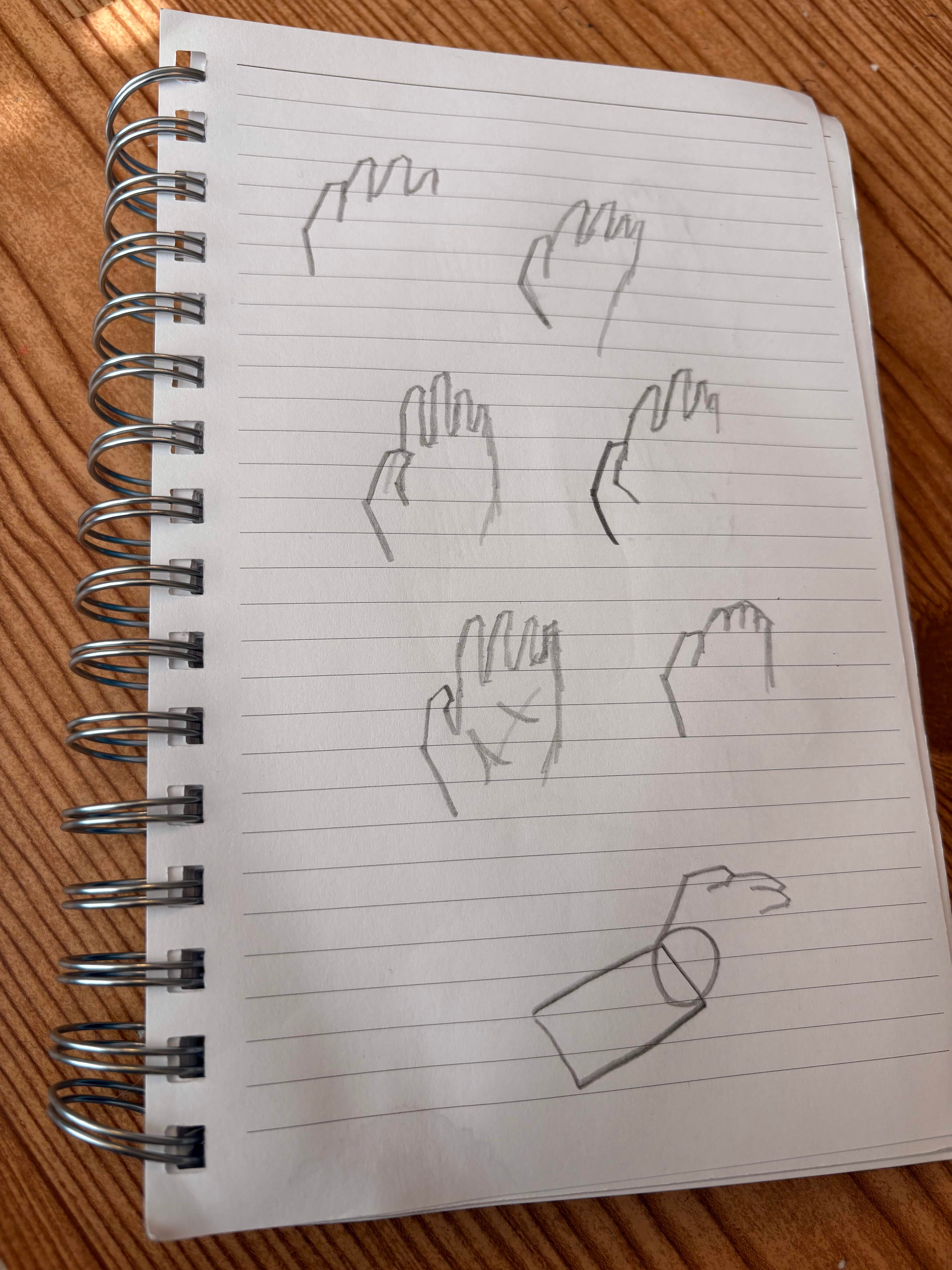
My 10 year old hates AI. He will never pass up an opportunity to derisively use the word “clanker” or “slop.” When I ask him why, his answer is simple: “They didn’t even earn it. They just stole it.” He likes to draw. He’s working on drawing flexed hands. He practices the lines, erases, resketches, then balls up the paper and tries again. When I watch him, I can understand his hurt.
When Open Evidence announced their newest models, Osler, Sackett, Snow, and Darwin, it gave me pause to hear the names of these strong, reputable scientists attached to AI models. As a JHU alum, I know how revered the name Osler is among providers. My first thought was whether OE had permission from the families and estates to use these scientists’ names. All I could find was that they didn’t need to because these were historical figures. Fair enough. But it’s interesting that OE has now filed trademark applications for these scientists’ names in affiliation with their models. It’s just a bit funny that the concept and aura of “Osler” now suddenly belongs to OE. It definitely tracks with how these technology companies seem to appropriate whatever they want these days, like the recent Navier-Stokes math controversy, where it’s not entirely impossible that OpenAI’s models may have trained on the work of prior mathematicians and then scooped them by claiming the solution as their own.
Stolen Valor refers to the act of falsely claiming military rank and decorations to obtain a benefit. There is universal revulsion at the idea of pretending to have made such a sacrifice to gain esteem. But does that deserve the same level of audacity as asking Copilot to draw you a picture, asking Claude to write your abstract, or using ambient AI to write your note? I think it depends on how present you remain in the creation and the attribution that you give.
One of the biggest criticisms I hear about ambient notes is that “it doesn’t sound like me.” The words you choose to use when you communicate in speech and writing are a reflection of who you’ve read, what cartoons you watched as a kid, what inside jokes you find funny, the music you love, and the styles of people you admire enough to try to emulate.
When you’re stuck on the right word to pick for a sentence and you go to Thesaurus.com, or even ask Gemini to give you some good alternatives for that particular word, the word you ultimately choose that just feels right is a reflection of your taste. But when we have LLMs make all those choices for us in our writing, it flattens out the language so that everyone’s words become the most probable next best option.Then something really important and intangible about the experiences behind how we communicate as people gets lost.
We live in an interesting moment in time where struggle can be bypassed with a prompt. While I don’t subscribe to the puritanical belief that suffering is morally necessary, there are certain kinds of struggle, like watching a 10 year old trying to learn how to draw a hand, that can be character defining. As educators and mentors, we need to help developing students gain the confidence to struggle through the thought process of evaluating what is produced for them. Making revisions matters, and knowing when and where to make those revisions is the new art. Developing taste means learning what’s considered good and understanding why it’s valued, then gradually forming your own judgments about what is worth valuing. The act of making those choices and making those revisions over and over again is how valor is earned.
💌 As always, thanks for reading. Get in touch and let me know your thoughts!
Thank you for joining us on this adventure. Stay tuned for more AI insights, best practices, and more future editions of AI+MedEd.
For education and innovation,
Karim
Share this with someone, have them sign up here.